
Introduction
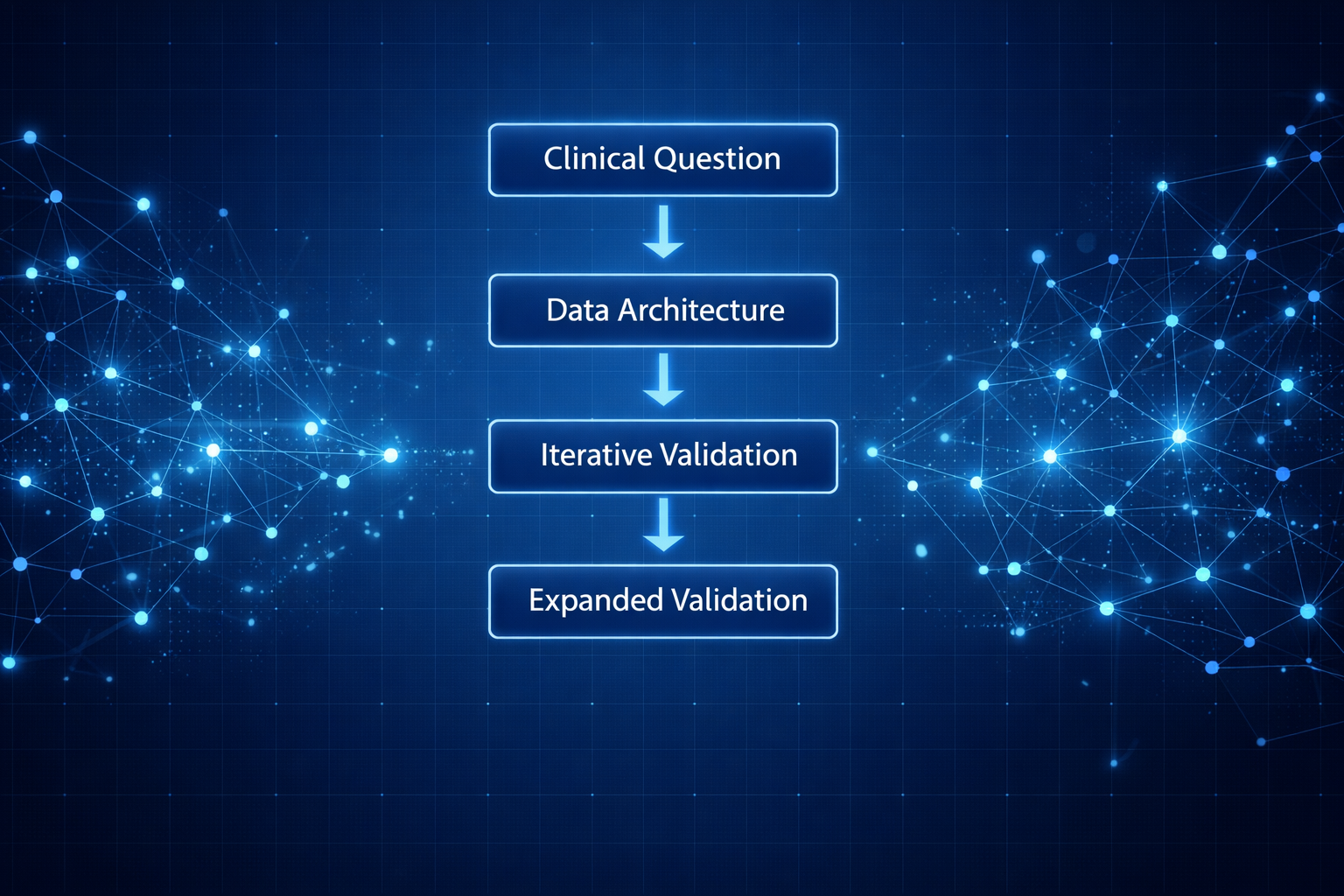
Clinical research often begins with an important question raised in real‑world medical practice. Physicians and research teams frequently observe patterns, treatment responses, or clinical uncertainties that deserve systematic investigation.
However, transforming a clinical question into a structured and reproducible research study requires more than curiosity. It requires a robust methodological framework, reliable data infrastructure, and transparent analytical processes.
At Nexus, our mission is to help research teams bridge this gap by providing the data and methodological foundations that enable high‑quality clinical research.
The Challenge of Translating Clinical Questions into Research
Many valuable research ideas originate directly from clinical environments. Physicians and trainees encounter unanswered questions every day:
- Why do certain patients respond differently to the same treatment?
- Are there measurable predictors of treatment outcomes?
- Can clinical observations be validated through structured data analysis?
While these questions are scientifically meaningful, they often face practical barriers:
- fragmented clinical data
- inconsistent data structures
- lack of reproducible analytical workflows
- limited research infrastructure
Without a structured research foundation, many promising ideas remain unexplored.
A Structured Research Foundation
Nexus supports research teams by building the foundational layers required for reproducible research.
Our approach focuses on three core components:
Research‑Ready Data Architecture
A structured data environment is the prerequisite for meaningful analysis. Nexus develops standardized data frameworks that allow clinical observations to be organized, documented, and prepared for research use.
This foundation ensures that data remains consistent, traceable, and suitable for analytical workflows.
Transparent Analytical Methodology
Clinical insights must be supported by clear and reproducible statistical processes. By implementing transparent analytical frameworks, research teams can evaluate hypotheses while maintaining methodological rigor.
This transparency improves the credibility and interpretability of research findings.
Evidence‑Oriented Research Workflow
Beyond analysis, research must ultimately produce evidence that can be interpreted, validated, and shared. Structured workflows ensure that research outputs remain reproducible and aligned with academic standards.
Supporting Independent Research Teams
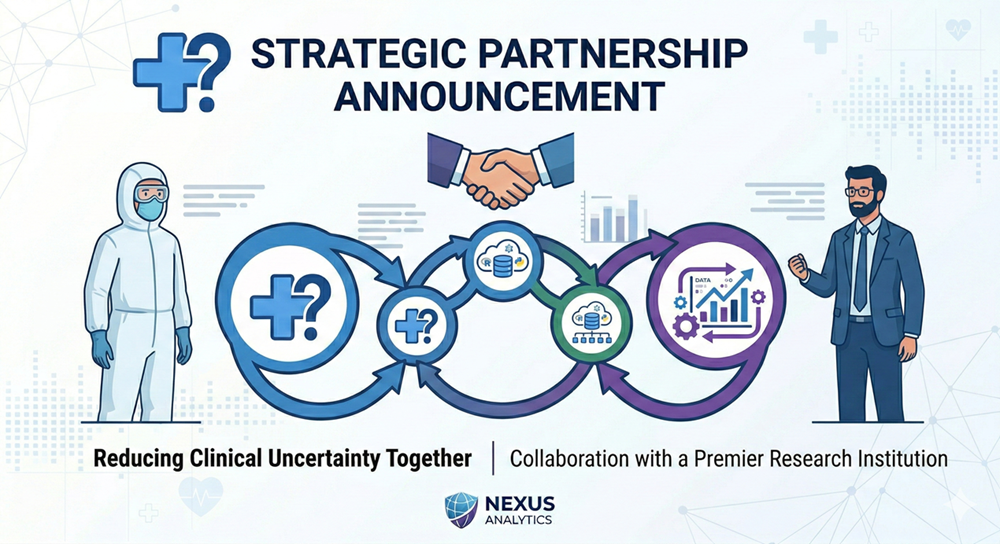
Nexus works with clinicians, hospitals and research institutions who seek to transform clinical observations into structured research studies.
Importantly, Nexus functions as a data infrastructure and methodological platform. The scientific interpretations and publications derived from this environment remain the responsibility of the respective research teams.
Our goal is to enable research — not to replace researchers.
Toward More Accessible Clinical Research
Modern medicine increasingly relies on data‑driven insights. By lowering the technical barriers associated with research infrastructure, more clinicians and trainees can participate in meaningful scientific investigation.
When real‑world clinical questions are supported by structured data systems and transparent analytical methods, they can evolve into reproducible evidence that contributes to medical knowledge.
Nexus is committed to building the infrastructure that makes this process possible.