
Introduction
Modern scientific research increasingly depends on complex datasets and interdisciplinary collaboration. However, many projects struggle with fragmented data structures and inconsistent validation procedures. These challenges reduce transparency and limit reproducibility.
The Nexus Evidence Chain was developed as a structured methodology designed to support reliable, traceable, and scalable research processes.
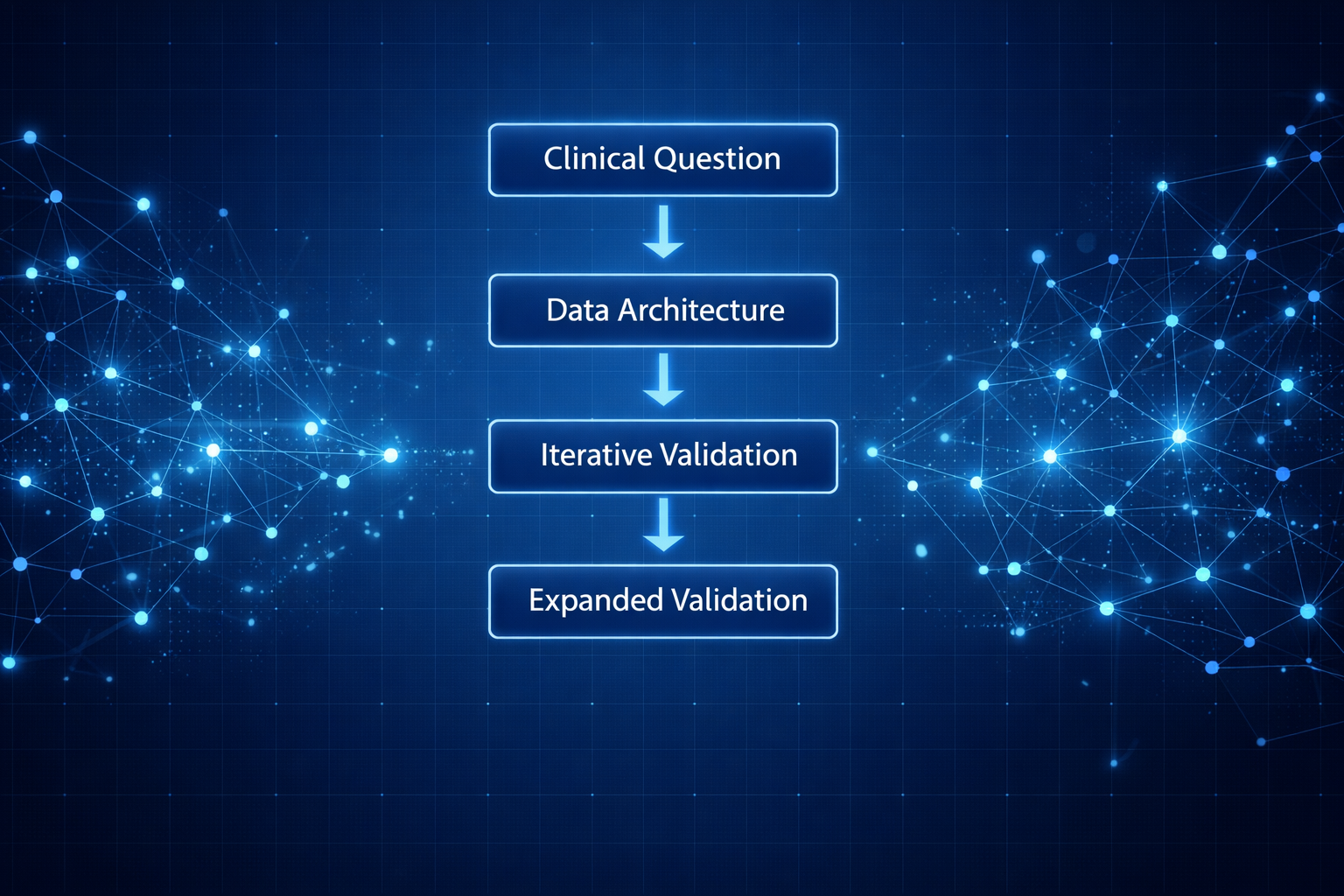
Stage 1: Clinical Question
Every research initiative begins with a clearly defined question.
Rather than collecting data without direction, the Nexus framework focuses first on identifying a precise scientific objective.
This stage ensures that:
- research goals remain focused
- analytical strategies align with scientific outcomes
- data collection remains purposeful and efficient
Stage 2: Data Architecture
Once the research objective is established, the next step is building a structured data environment.
This includes:
- dataset harmonization
- standardized data structures
- secure storage frameworks
- traceable data pipelines
A strong data architecture forms the foundation for all future analysis.
Stage 3: Iterative Validation
Rather than performing a single analytical pass, the Nexus framework uses iterative validation cycles.
Through repeated testing and refinement, researchers can:
- identify methodological weaknesses
- improve algorithmic performance
- strengthen analytical accuracy
This continuous feedback loop improves reliability before scaling the analysis.
Stage 4: Expanded Validation
In the final stage, results are evaluated across broader and more diverse datasets.
Expanded validation ensures that research findings remain:
- reproducible
- institutionally credible
- suitable for regulatory review
This stage transforms analytical outputs into reliable scientific evidence.
Conclusion
The Nexus Evidence Chain provides a transparent and systematic approach to modern research challenges. By integrating methodological clarity with robust data architecture, the framework supports evidence-based insights that can be trusted by institutions, researchers, and collaborators.